Historia
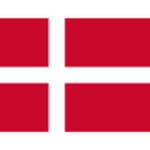
The Denmark national football team (Danish: Danmarks herre-fodboldlandshold or herrelandsholdet) represents Denmark including Greenland, but not the Faroe Islands, in men's international football competitions. It is controlled by the Danish Football Association (DBU), the governing body for the football clubs which are organised under DBU. Denmark's home stadium is Parken Stadium in the Østerbro district of Copenhagen.
Denmark were winners of the unofficial 1906 Intercalated Games football competition and silver medalists at the 1908 and 1912 Olympics. However, as amateurs who prohibited their internationals from becoming professionals at foreign clubs, Denmark did not qualify for the FIFA World Cup until 1986. Since the 1980s and the "Danish Dynamite" team, Denmark remained competitive in international tournaments, winning the 1992 European Championship in Sweden, which marked the team's most prominent victory and the 1995 King Fahd Cup (the predecessor of FIFA Confederations Cup). Denamrk has long-standing football rivalries with Nordic neighbours Norway and Sweden.
Leer toda la historia
Amateur years
On 12 April 1896, Denmark XI defeated Podilatikos Syllogos Athinon, either 9–0 or 15–0, at the Neo Phaliron Velodrome in Athens in a demonstration game during the 1896 Olympic Games.
On 18 April 1897, a game was played in Hamburg when a selection team from the Danish Football Association defeated a selection team from the Hamburg-Altona Football Association, 5–0 in the presence of 5,000 spectators.
The first three editions of the Olympic football event in 1900–1906 had an unofficial status, as the event was not yet open for national football teams to compete, and only had limited participation of three or four club teams from a few nations. Denmark had no club team invited in the 1900 Olympics and the 1904 Olympics, but then received a special invitation for the unofficial 1906 Olympics, to compete against one Greek club team (Athens) and two club teams from the Ottoman Empire (Smyrna and Thessaloniki). The team to represent Denmark was compiled of players from the Copenhagen Football Association (KBU), and they won the event, and thereby an unofficial gold medal. Two years later, in the first official football tournament at the 1908 Olympics, Denmark won a silver medal. At the next Olympics, in 1912, the team again won a silver medal, which was followed by a golden era from July 1912 until August 1920, with Denmark ranked most of the time as number one in the world by the Elo ranking. The first official national football match was played on 19 October 1908 during the Olympic Games in London. Denmark beat France's second team 9–0 in the tournament's quarter-finals.
Although Denmark figured fairly prominently in the pre-FIFA World Cup era, international success would elude them for years from the first World Cup in 1930 and forward. Despite the country's ability to produce outstanding football talents, the Danish Football Union (DBU) only had the ambition (or economy) to send the national team to play friendly matches and in the regional tournament, the Nordic Championship, from October 1920 until June 1948. When DBU opted to set their sights higher, they allowed the national team to start contesting the Olympics again, promptly resulting in a bronze medal at the 1948 Olympics. After, the team only reached the quarter-final at the 1952 Olympics, with the DBU choosing not to contest the next 1956 Olympics. As football remained an amateur past-time, most of the best Danish footballers moved abroad to make a living, and due to DBU enforcing the rule to bar all professionals from the national team, it started to become difficult to assemble a highly competitive team.
Denmark experienced their next revival at the 1960 Olympics with a third set of Olympic silver medals. This was followed by another notable performance at the 1964 European Nations' Cup, where Denmark impressively finished in fourth place. However, this finish was considered by many as being more the result of a comparatively easy draw rather than a result of a well-playing team. In order for Denmark to qualify for the semi-final, they only had to defeat Malta, Albania and Luxembourg. In the semi-final, Denmark fell 3–0 to the Soviet Union, then lost the third-place match to Hungary.
The strict rule of only allowing amateurism at the national team was finally abolished by the DBU in May 1971, as they had acknowledged this change was needed in order to build a highly competitive team. In February 1978, when the DBU also decided to allow professional football to be introduced in the Danish leagues, the way was at the same time paved for the national team to sign its first sponsorship with the well-known Danish brewery Carlsberg. The new sponsorship enabled the DBU to hire the German Sepp Piontek in July 1979 as the first full-time professional coach of the national team. The full transition of the national team from amateurism to professionalism had now been accomplished, and indeed, this would soon lead to a vast improvement in the performances of the team.
According to Rob Smyth and Lars Eriksen, authors of a book on the "Danish Dynamite" team that would soon emerge:
That process [the transition to professionalism] was accelerated by the fact that so many of the national team were playing abroad, and values learned there were slowly seeping in. ... Denmark got a headstart on football globalisation, benefiting from the enlightenment and experience that comes with playing abroad. At Euro 84, their 20-man squad contained 14 overseas-based players; the other seven teams had only five between them. At Mexico 86, their squad included players from the champions of Italy, West Germany, England, Holland and Belgium, but not Denmark.
Danish Dynamite (1980–1990)
In the 1982 FIFA World Cup qualification, Denmark finished with four wins and four losses, including a 3–1 win against the eventual World Cup champions Italy, but Denmark failed to qualify for the final tournament. Qualification for UEFA Euro 1984 saw Denmark defeat England at Wembley Stadium when Allan Simonsen converted a penalty kick for a 1–0 win. Denmark qualified for their first international tournament since 1964, and the team was dubbed "Danish Dynamite" in a competition for the official Danish Euro 1984 song. Denmark's participation ended in the semi-final when the team lost on penalties to Spain, most remembered for Preben Elkjær's penalty miss, his shorts torn apart. Following the strong performance at the finals, the name "Danish Dynamite" became a mainstay for the following decade of the Denmark national team under head coach Sepp Piontek.
Seguir leyendo en Wikipedia →
Texto de Wikipedia, licencia CC BY-SA 4.0 (English)
Plantilla
| # | Porteros | PJ | Goles |
|---|---|---|---|
| 1 | Andreas Jungdal | 0 | 0 |
| 16 | Mads Hermansen | 1 | 0 |
| 22 | Filip Jorgensen | 0 | 0 |
| # | Defensas | PJ | Goles |
|---|---|---|---|
| 2 | Joachim Andersen | 6 | 2 |
| 3 | Oliver Provstgaard | 0 | 0 |
| 4 | Lucas Hogsberg | 1 | 0 |
| 5 | Joakim Maehle | 4 | 0 |
| 6 | Victor Nelsson | 1 | 0 |
| 13 | Andreas Christensen | 6 | 1 |
| 13 | Rasmus Kristensen | 4 | 0 |
| 15 | Victor Bak | 0 | 0 |
| 17 | Patrick Dorgu | 5 | 2 |
| 18 | Alexander Bah | 1 | 0 |
| 18 | Anton Gaaei | 0 | 0 |
| # | Centrocampistas | PJ | Goles |
|---|---|---|---|
| 7 | Victor Froholdt | 7 | 1 |
| 7 | Mathias Jensen | 1 | 0 |
| 10 | Christian Eriksen | 4 | 0 |
| 10 | Thomas Jorgensen | 0 | 0 |
| 12 | Mads Bidstrup | 0 | 0 |
| 14 | Mikkel Damsgaard | 7 | 3 |
| 15 | Nikolas Nartey | 0 | 0 |
| 20 | Albert Gronbaek | 2 | 0 |
| 21 | Morten Hjulmand | 7 | 0 |
| 23 | Pierre-Emile Hojbjerg | 6 | 0 |
| # | Delanteros | PJ | Goles |
|---|---|---|---|
| 8 | Gustav Isaksen | 5 | 1 |
| 9 | Rasmus Hojlund | 6 | 5 |
| 11 | William Osula | 0 | 0 |
| 11 | Andreas Skov Olsen | 1 | 0 |
| 17 | Adam Daghim | 0 | 0 |
| 19 | Kasper Hogh | 1 | 1 |
| 20 | Mohamed Daramy | 0 | 0 |
| Jacob Trenskow | 0 | 0 |