Histoire
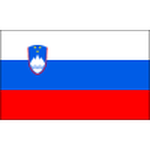
The Slovenia national football team (Slovene: Slovenska nogometna reprezentanca) represents Slovenia in men's international football and is controlled by the Football Association of Slovenia, the governing body for football in Slovenia. The national squad is under the global jurisdiction of FIFA and is governed in Europe by UEFA. It competes in the three major professional tournaments available to European nations: the FIFA World Cup, UEFA Nations League and the UEFA European Championship. Slovenia played its first official match in 1992, one year after the country gained independence from Yugoslavia. The majority of Slovenia's home matches are played at Stožice Stadium in Ljubljana.
Slovenia have qualified for a major tournament four times, twice for the FIFA World Cup and twice for the UEFA European Championship. They failed to progress from the group stage of these tournaments in their first three appearances, before finally doing so at UEFA Euro 2024, when Slovenia qualified for the knockout stages by drawing all three group stage matches and being one of the best third-place teams. At the 2010 FIFA World Cup, Slovenia achieved their first (and so far only) victory in a major tournament, defeating Algeria 1–0. Other noteworthy results include a 1–0 win over Italy in 2004, which was Italy's only defeat in the entire 2006 World Cup campaign (qualifiers and the final tournament).
Boštjan Cesar holds the record for most appearances for Slovenia, having played 101 times between 2003 and 2018. Zlatko Zahovič scored 35 goals for Slovenia and is the record holder for most goals scored.
Lire toute l'histoire
Origins and pre-independence years (1921–1991)
Before Slovenia's independence in 1991, the national football team of Slovenia existed only as a regional team, not officially recognised by FIFA. On 23 June 1921, the Slovenian capital of Ljubljana hosted a match between France and a selection of players from Slovenian clubs. One of the guests at the match was acting FIFA president Jules Rimet, who later initiated the first FIFA World Cup tournament. The French team won the match 5–0 and, although the match was not official by international standards, it was, at least in Slovenia, generally accepted as the first appearance of the Slovenia national team. In the following decades, Slovenia played several unofficial friendly matches, including in 1956 against China, in 1968 against Austria, in 1990 against Bosnia and Herzegovina and in 1991 against Croatia.
Independence, first victory and first qualifiers (1992–1998)
In 1992, one year after Slovenia's independence from Yugoslavia, the Football Association of Slovenia was admitted to FIFA. In the same year, on 3 June, Slovenia played its first FIFA-recognised game, a friendly match against Estonia in Tallinn. The match ended in a 1–1 draw, with the first official goal for the team being scored by Igor Benedejčič. The first coach was Bojan Prašnikar. On 7 April 1993, the two teams played another friendly, and this time Slovenia achieved its first international victory by winning the match 2–0.
In 1994, managed by Zdenko Verdenik, Slovenia debuted in official competitions as the team competed in the UEFA Euro 1996 qualifiers. Slovenia played in Group 4 and finished in fifth place out of six teams, with eleven points. In the opening match of the qualifiers, Slovenia drew 1–1 at home against 1994 World Cup finalists Italy. In 1998 World Cup qualification, Slovenia was drawn with Denmark, Croatia, Greece and Bosnia and Herzegovina, finishing in last place after registering just one point in eight matches.
UEFA Euro 2000 campaign
In July 1998, Srečko Katanec was appointed as the new manager of the team. Under his guidance, Slovenia finished the UEFA Euro 2000 qualifiers in second place, only behind Norway. Zlatko Zahovič scored eight of Slovenia's twelve goals in the qualifiers. In the additional play-offs, Slovenia faced Ukraine. The first leg was played in Ljubljana, which Slovenia won 2–1 after trailing 1–0. Zahovič scored Slovenia's first goal, and Milenko Ačimovič scored a goal from the halfway line late in the match to make the score 2–1. The second match was played in snowy conditions in Kyiv. Serhii Rebrov scored from the penalty spot in the 68th minute to give Ukraine a lead, while Slovenia equalised eight minutes later with a goal by Miran Pavlin. The 1–1 draw meant that Slovenia won 3–2 on aggregate and qualified for its first major tournament.
At Euro 2000, Slovenia were drawn into Group C, together with Spain, FR Yugoslavia and Norway. In the first game, Slovenia played against Yugoslavia and took a 3–0 lead after one hour of play, with Zahovič scoring twice and Pavlin once. However, Yugoslavia made a comeback as they scored three goals in just six minutes for a 3–3 draw, despite playing with only ten players after Siniša Mihajlović was sent off. The second game against Spain was played in Amsterdam. Spain took a 1–0 lead with a goal by Raúl, but Slovenia equalised after one hour of play as Zahovič scored his third goal of the tournament. Just a minute later, Spain were leading again as Joseba Etxeberria scored the winning goal. In the last match of the group stage, Slovenia played against Norway and still had a chance to progress to the quarterfinals. The match finished in a goalless draw and Slovenia won its second point of the tournament, but were eliminated.
2002 FIFA World Cup campaign
For the 2002 FIFA World Cup qualifiers, Slovenia were drawn into a group with Russia, FR Yugoslavia, Switzerland, Faroe Islands and Luxembourg. In its first five qualifying games, Slovenia won only one match (away at Luxembourg). Underdogs Faroe Islands held them to a 2–2 draw, after the Slovenes were leading 2–0 with less than five minutes remaining. In the next five matches, Slovenia won four, including a last minute victory over Russia. The team finished in second place without a single defeat and advanced to the play-off stage, where they faced Romania. Slovenia came from a goal down to win the first game 2–1 with the goals from Ačimovič in the first half and Milan Osterc in the second half. In the second leg in Bucharest, Slovenia took the lead with a goal scored by Mladen Rudonja. The final result was 1–1, and Slovenia qualified for its second consecutive major tournament and first ever World Cup.
At the World Cup, Slovenia played in Group B with Spain, Paraguay and South Africa. In the first game, Slovenia faced Spain in a Euro 2000 rematch. Spain took the lead in the first half with a goal from Raúl. Juan Carlos Valerón scored Spain's second goal with fifteen minutes remaining. A few minutes later, Sebastjan Cimirotič scored the first World Cup goal for Slovenia to cut the lead in half, before Fernando Hierro scored in the 87th minute for a 3–1 Spanish victory. The match is notable due to the conflict between manager Katanec and star player Zahovič, after which Katanec announced his retirement after the tournament, while Zahovič was expelled from the team and sent home. Slovenia lost the two remaining matches against South Africa (1–0) and Paraguay (3–1) and finished last in the group with three defeats.
Lire la suite sur Wikipédia →
Texte de Wikipédia, licence CC BY-SA 4.0 (English)
Effectif
| # | Gardiens | Matchs | Buts |
|---|---|---|---|
| 1 | Jan Oblak | 5 | 0 |
| 12 | Matevz Vidovsek | 0 | 0 |
| 16 | Zan Leban | 0 | 0 |
| # | Défenseurs | Matchs | Buts |
|---|---|---|---|
| 2 | Zan Karnicnik | 6 | 0 |
| 3 | Jure Balkovec | 1 | 0 |
| 4 | Mark Zabukovnik | 0 | 0 |
| 5 | Srdjan Kuzmic | 0 | 0 |
| 6 | Jaka Bijol | 6 | 0 |
| 8 | Jost Urbancic | 0 | 0 |
| 13 | Erik Janza | 6 | 0 |
| 14 | Marcel Ratnik | 0 | 0 |
| 17 | David Zec | 0 | 0 |
| 21 | Vanja Drkusic | 6 | 0 |
| 23 | David Brekalo | 4 | 0 |
| # | Milieux | Matchs | Buts |
|---|---|---|---|
| 8 | Sandi Lovric | 2 | 1 |
| 10 | Timi Elsnik | 6 | 1 |
| 11 | Svit Seslar | 5 | 0 |
| 13 | Nai Koren Tian | 0 | 0 |
| 14 | Tamar Svetlin | 1 | 0 |
| 17 | Adrian Zeljkovic | 0 | 0 |
| 19 | Tomi Horvat | 4 | 0 |
| 22 | Adam Gnezda Cerin | 5 | 0 |
| # | Attaquants | Matchs | Buts |
|---|---|---|---|
| 7 | Tjas Begic | 0 | 0 |
| 7 | Benjamin Verbic | 1 | 0 |
| 9 | Andraz Sporar | 3 | 0 |
| 11 | Zan Celar | 0 | 0 |
| 15 | Danijel Sturm | 4 | 0 |
| 18 | Zan Vipotnik | 5 | 1 |
| 20 | Aljosa Matko | 0 | 0 |
| Ester Sokler | 0 | 0 |