Tarihçe
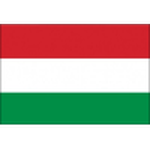
The Hungary national football team (Hungarian: magyar labdarúgó-válogatott, pronounced [ˈmɒɟɒr ˈlɒbdɒruːɡoː ˈvaːloɡɒtotː]) represents Hungary in men's international football, and is controlled by the Hungarian Football Federation. The team has made nine appearances in the FIFA World Cup, and five in the UEFA European Championship. Hungary plays their home matches at the Puskás Aréna, in Budapest, which opened in November 2019.
Hungary has a significant history in international football, having won three Olympic gold medals, finished as runners-up in the 1938 and 1954 World Cup, and finished in third place in the 1964 European Championship. Hungary developed influential tactical approaches and achieved international success with the Golden Team, which included forward Ferenc Puskás, one of the leading goalscorers of the 20th century. The team influenced later tactical developments in football, including aspects of the style associated with Total Football. FIFA named the Puskás Award, given annually to the player who scored the "most beautiful" goal of the calendar year in honor of Puskás. The side of that era holds the second all-time highest Football Elo Ranking in the world, with 2233 in 1954, and one of the longest undefeated runs in football history, remaining unbeaten in 31 games, spanning over four years and including the Match of the Century.
The Hungarian team faced a severe drought starting from their elimination at the 1986 World Cup, failing to qualify for a major tournament for thirty years and reaching their lowest FIFA ranking (87) in 1996, as well as finishing sixth in their group of the Euro 2008 qualifiers. They then began a turnaround, qualifying for three consecutive European Championship in 2016, 2020 and 2024, as well as achieving promotion to the 2022–23 UEFA Nations League A.
Tüm tarihçeyi oku
Although Austria and Hungary were constituent countries of the dual monarchy known as the Austro-Hungarian Empire, they formed separate football associations and teams around the start of the 20th century.
1910s
The national side first appeared at the Summer Olympic Games in 1912 in Stockholm, Sweden. The team had to ask for donations in order to be able to go to the Games. Hungary lost 7–0 to England and thus were eliminated.
After the Olympic Games Hungary played two matches against Russia in Moscow. The first match was a 9–0 win and the second 12–0, which is still a record for the national side. The top scorer of the two matches was Imre Schlosser who scored seven goals. The beginning of World War I had a deep impact on the thriving Hungarian football. Both the country and the clubs were suffering financial problems. During WWI Hungary played Austria 16 times. In 1919 England claimed the exclusion of the Central Powers (including Hungary) from FIFA. When FIFA refused England's plea, the British (English, Scottish, Welsh, and Irish) associations decided to resign from FIFA.
1920s
Budapest was denied the opportunity to host the 1920 Summer Olympics, which were held in Belgium. The countries of the Central Powers (Germany, Austria-Hungary, Ottoman Empire and Bulgaria) were excluded from the Olympics. Hungary used a unique 2–3–5 formation.
During this period the Fogl brothers (József and Károly Fogl) played in the national team. Between 1921 and 1924, Béla Guttmann also played six times for the team. At the 1924 Summer Olympics in Paris, Guttmann objected to the fact that there were more officials than players in the Hungary squad and that the hotel was more suitable for socialising than match preparation, and to demonstrate his disapproval he hung dead rats on the doors of the travelling officials. At the 1924 Summer Olympics, in the first match Hungary beat Poland. They then lost to Egypt. As a consequence, both the head coach and the head of the Hungarian Football Federation resigned.
Between 1927 and 1930, Hungary participated in the Central European International Cup which is considered to be the first international tournament, with Austria, Czechoslovakia, Italy and Switzerland. In the final, Hungary lost to Italy 5–0. On 12 June 1927, Hungary beat France 13–1, which is still a record. József Takács scored six goals.
1930s
The first FIFA World Cup was held in Uruguay in 1930, but Hungary were not invited and did not take part in the tournament; there were no qualification matches. Hungary first appeared in the 1934 World Cup in Italy. Hungary's first World Cup match was against Egypt on 27 May 1934, a 4–2 win. The goals were scored by Pál Teleki, Géza Toldi (2) and Jenő Vincze. In the quarter-finals, Hungary faced neighbouring arch-rivals Austria and lost 2–1, the only Hungarian goal coming from György Sárosi.
Hungary entered the 1936 Olympics, where in the first round they were eliminated by Poland, 0–3.
The 1938 World Cup was held in France. The first match was played against Dutch East Indies and Hungary won 6–0. Sárosi and Gyula Zsengellér each scored twice while Vilmos Kohut and Toldi scored one goal each. In the quarter-finals, Hungary beat Switzerland 2–0 with goals by Sárosi and Zsengellér. In the semi-final at the Parc des Princes, Paris, Hungary beat Sweden 5–1 with goals by Ferenc Sas and Sárosi and a hat-trick by Zsengellér. In the final, Hungary faced Italy at the Stade Olympique de Colombes, Paris and fell 4–2. The Hungarian goals were scored by Pál Titkos and Sárosi.
1950s
This Hungarian team of the 1950s featured strong players including Ferenc Puskás, Sándor Kocsis, József Bozsik, and Nándor Hidegkuti, known collectively as the Aranycsapat ("Golden Team") or the "Magnificent Magyars". The team achieved a record of 43 victories, 6 draws, and 0 defeats from 14 May 1950 until they lost 3–1 to Turkey on 19 February 1956.
In the 1952 Summer Olympics in Helsinki, Hungary beat Romania 2–1 with a goal each from Czibor and Kocsis in the preliminary round. In the first round Hungary beat Italy 3–0; in the quarter-finals Hungary beat Turkey 7–1; and in the semi-finals Hungary faced Sweden, the 1948 Olympic champions and won 6–0. In the final, Hungary beat Yugoslavia 2–0 with a goal each from Puskás and Czibor and thus won the Olympic title for the first time.
On 25 November 1953, England played Hungary at Wembley Stadium, London in a match later dubbed as the "match of the century". The English team were unbeaten for 90 years at home. In front of 105,000 spectators Nándor Hidegkuti scored in the first minute. At half-time the score was 4–2 to Hungary. In the second half the Hungarians scored twice more (Hidegkúti and József Bozsik). The final score was 6–3.
On 23 May 1954, the Hungary national team beat England 7–1 (which remains their worst defeat to date) at the Puskás Ferenc Stadium. At that time in Hungary there was a saying about the match: Az angolok egy hétre jöttek és hét-egyre mentek, which is a double play on words. The word "week" in Hungarian is called "hét", meaning the number seven: "the English came for one week and left with 7:1."
Vikipedi'de devamını oku →
Metin Vikipedi'den, CC BY-SA 4.0 lisansı (English)
Kadro
| # | Kaleciler | Maç | Gol |
|---|---|---|---|
| 1 | Balazs Toth | 3 | 0 |
| 12 | Bence Gundel-Takacs | 0 | 0 |
| 22 | Armin Pecsi | 0 | 0 |
| # | Defans | Maç | Gol |
|---|---|---|---|
| 2 | Attila Osvath | 1 | 0 |
| 3 | Mark Csinger | 0 | 0 |
| 4 | Kornel Szucs | 0 | 0 |
| 4 | Bence Varkonyi | 0 | 0 |
| 5 | Akos Markgraf | 0 | 0 |
| 6 | Willi Orban | 6 | 0 |
| 11 | Milos Kerkez | 6 | 0 |
| 14 | Bendeguz Bolla | 6 | 0 |
| 18 | Zsolt Nagy | 4 | 0 |
| 20 | Roland Sallai | 4 | 1 |
| # | Orta saha | Maç | Gol |
|---|---|---|---|
| 7 | Tamas Szucs | 0 | 0 |
| 8 | Milan Vitalis | 4 | 0 |
| 10 | Dominik Szoboszlai | 6 | 1 |
| 13 | Andras Schafer | 4 | 0 |
| 14 | Rajmund Toth | 0 | 0 |
| 15 | Aron Csongvai | 0 | 0 |
| 17 | Callum Styles | 6 | 0 |
| 21 | Alex Toth | 6 | 0 |
| 23 | Aron Doktorics | 0 | 0 |
| # | Forvetler | Maç | Gol |
|---|---|---|---|
| 9 | Donat Barany | 0 | 0 |
| 16 | Daniel Lukacs | 5 | 2 |
| 17 | Gabor Jurek | 0 | 0 |
| 18 | Bendeguz Kovacs | 0 | 0 |
| 19 | Jozsef Szalai | 0 | 0 |
| 19 | Barnabas Varga | 5 | 5 |
| 20 | Milan Toth | 0 | 0 |
| 21 | Zsombor Gruber | 2 | 1 |
| 23 | Damir Redzic | 1 | 0 |